
Food Insecurity in Canada Remains at Historic Highs as Children Continue to Make Up One-Third of Food Bank Users
By: Faith Torres
All Nations International Development Agency
Food insecurity in Canada remains at historic highs, and recent data from the Canadian government is reinforcing what many of us are already seeing in our communities every day. What stands out most is not just the scale of need, but its persistence. What stands out most is not just how many people are affected, but how long they’ve been living with it.
Nearly one in four Canadians are now affected by food insecurity in some form, and children continue to make up roughly one-third of food bank users across the country.
This is no longer a short-term surge. It is a sustained reality. What we are seeing nationally, across Canada, food bank usage has nearly doubled since 2019, with approximately 2.2 million visits each month.
Behind those numbers are families navigating daily trade-offs that have become increasingly familiar:
- Working households whose income still does not cover basic needs
- Parents stretching meals to ensure children are fed first
- Families moving in and out of instability without ever fully regaining stability
- And households relying on food banks as part of their ongoing monthly survival strategy
While these experiences vary, the pattern is consistent: food insecurity is becoming embedded in everyday life, food prices remain elevated, housing costs continue to rise faster than incomes and wage growth and social assistance have not kept pace with the cost of living.
Food insecurity exists in different stages of need, and it can look very different from one household to another. For some, it begins with the constant worry of not knowing whether there will be enough food to last through the week or until the next source of income. This uncertainty alone can create stress and force difficult decisions about what to prioritize.
As pressures increase, families may begin to compromise on the quality or quantity of food they are able to access. This might mean choosing less nutritious options, reducing portion sizes, or stretching meals further than is comfortable in order to make them last longer. These choices are often made quietly and out of necessity, as households try to manage limited resources in the best way they can.
In more severe situations, food insecurity can mean skipping meals altogether or going entire days without eating. At this stage, the impact is not only physical, but also emotional and mental, affecting energy levels, focus, and overall well-being.
Together, these stages help illustrate that food insecurity is not a single experience, but a continuum of need that deepens over time when pressures persist.
In some regions of Canada, rates of moderate and severe food insecurity now exceed 25 per cent. Food insecurity does not remain isolated to the grocery budget. It affects children’s learning, household stress levels, mental well-being, and long-term health outcomes. Over time, it can shape how families experience stability, opportunity, and even dignity in their daily lives. Frontline workers often describe a deeper layer to this reality not just concern about affordability, but the ongoing challenge of trying to maintain consistency and normalcy within constrained circumstances.
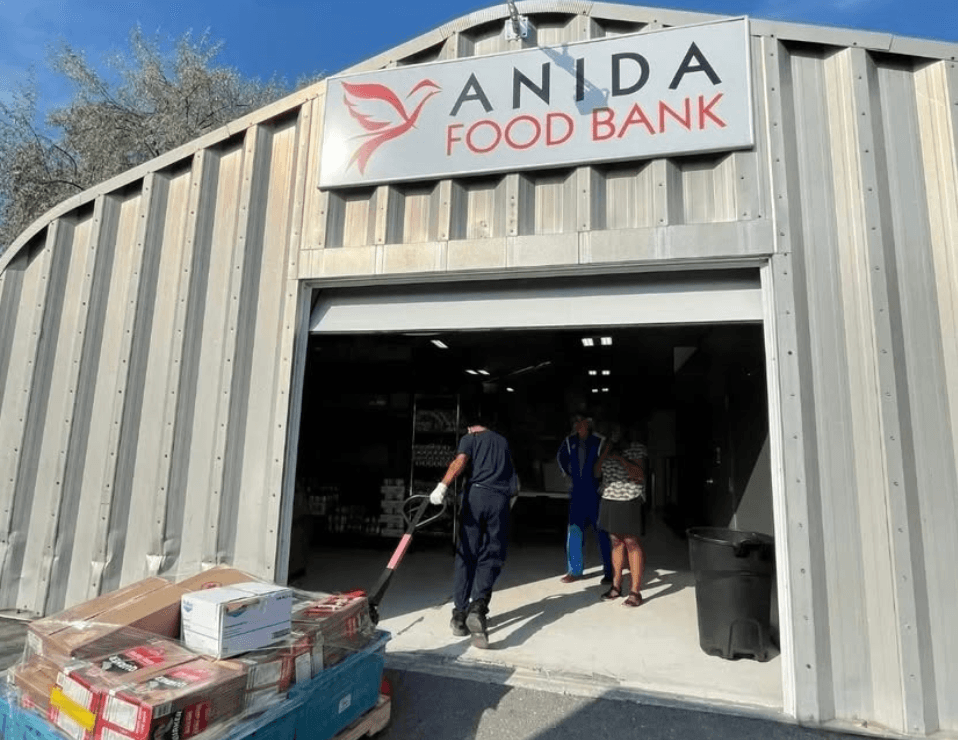
At ANIDA, we continue to respond to the growing needs within the communities we serve by helping families access essential food supports, including fresh produce, milk, and other dairy products. We are also intentional about meeting people where they are by accommodating a range of dietary requirements, ensuring that households can receive food that aligns with their cultural and personal needs, including vegan, vegetarian, and halal options.
Alongside food access, we are strengthening our children-focused programming and expanding community-based initiatives that support short-term family stabilization.
These efforts are designed not only to meet immediate needs, but also to provide a sense of continuity and dignity for families navigating ongoing financial and food insecurity.
Whether through child-friendly supports, community partnerships, or targeted distributions, our aim is to reduce pressure on households in practical and responsive ways.
However, it is important to recognize that this work is happening within a broader system of sustained pressure. The demand we are seeing is not cyclical in the traditional sense it does not reset or significantly ease between distribution periods.
Instead, families are experiencing ongoing and compounding challenges, where each cycle of support begins before the last one has fully resolved. This reality reinforces the importance of a consistent, adaptive, and compassionate response that can meet immediate needs while remaining attentive to the longer-term instability many households continue to face.
What the data confirms is simple, but important: Food insecurity in Canada is not easing. And while it may be more visible in statistics, it is still experienced quietly in households across the country. The challenge now is not awareness, it is urgency.
To our donors and supporters, thank you for continuing to stand with families navigating this reality. Your support is not only meeting immediate food needs. It is helping provide stability in a system where stability is increasingly hard to maintain. And while the challenge is significant, so is the collective impact of those who choose not to look away.
Together, we remain committed to ensuring families are not left to navigate this alone.

About the Author:
Faith Torres is the Fundraising Coordinator at All Nations International Development Agency (ANIDA). She brings a wealth of experience from her education and background working in non-profit. She holds a Bachelor’s Degree in Business Administration: International Development, as well as a Master’s Degree in Development Studies. She is eager to contribute her experience and dedication to initiatives that empower communities and drive meaningful change.