
A local Liberian wishes to bring the Hope for Tomorrow program to his country. Read what he has to say about Liberia and his plans for the program.
As many of you know, we recently implemented our Hope for Tomorrow initiatives in Liberia. Last year, several locations across Canada had prepared to come together for ANIDA Day to raise funds for these initiatives, however, all events were postponed in observation of public health recommendations. We are excited to announce that our virtual ANIDA Day will take place April 11th, 2021! The proceeds will go towards our Hope for Tomorrow program to help communities who need it most, like those in Liberia.
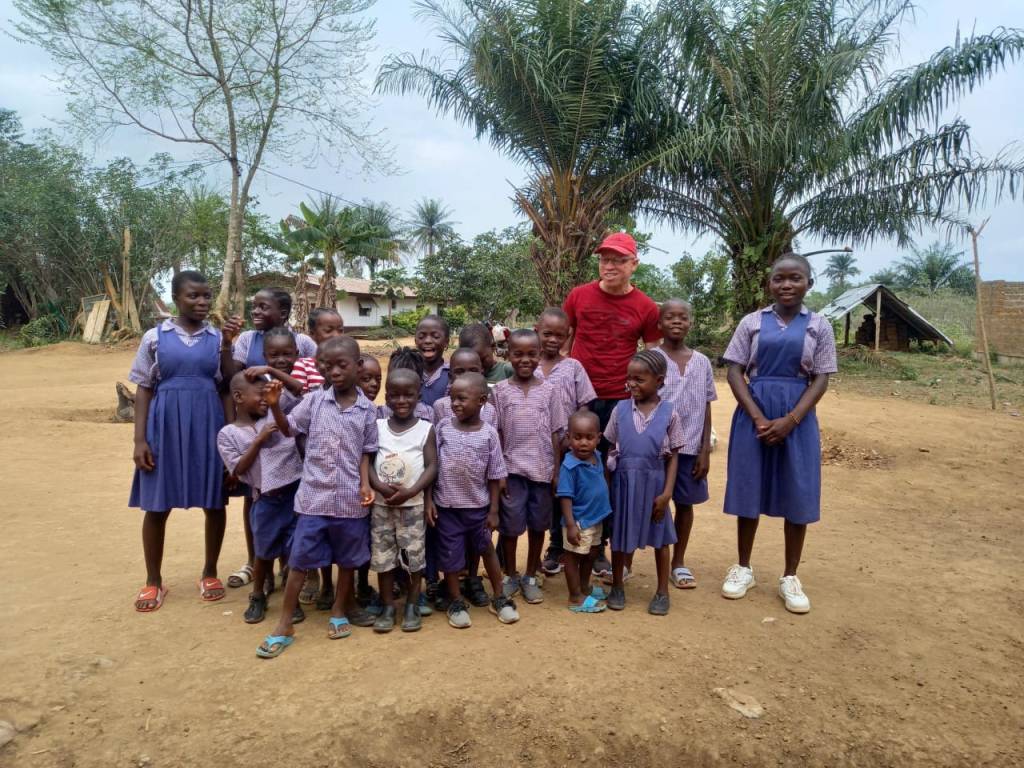
Why Liberia?
We spoke to Abieso W. Gono, who is a Liberian and a coordinator for one of our programs, about what it is like to live in Liberia and why they need programs like the ones ANIDA offers.
Abieso was born in Liberia and has spent the majority of his life there. He watched his country slowly deteriorate due to two different civil wars and an Ebola outbreak. He was one of the lucky ones. He was able to move away from the violence, go to teacher’s college and get his associates degree. He has since returned to Liberia and has worked with many organizations to help address the issues facing his fellow citizens.
What Are the Most Pressing Issues?
Currently, COVID has broken Liberia’s already struggling economy forcing many to live well below the poverty line. According to Abieso, over half of the country’s school aged children have become “street children,” meaning that they are working to help support their family instead of attending school. In addition to missing out on their education, street children are at risk of being involved in car crashes, kidnapping and, physical and sexual abuse.
For some of these children, abuse isn’t something that they can escape. Liberia has been in and out of several lockdowns, leaving women, children and other vulnerable citizens trapped with their abusers.
Even if we were able to eradicate COVID from Liberia, access to education would still be a large issue. This is mostly due to many parents not prioritizing education over work, especially for female children.
What Needs to Be Done?
There are two main avenues that need to be tackled: education for children and education for adults. Adults, and more specifically women, need to be educated on sexual health and the importance of educating the next generations. Children need access to education to reach their full potential.
Abieso suggests creating education programs close to or in villages, to provide easy access to them, for both children and adults. Having parents learn alongside their children can help encourage everyone to learn as well as give proof to adults about the benefits of education.
What You Can Do
If you would like to help, the first thing you can do is educate yourself on Liberia and the problems they’re facing, and then share what you’ve learned with others. The more people who are made aware, the more we can inspire others to help. Another way to help is donating to ANIDA or participating in ANIDA’s fundraising events to help us fund the programs we have in place and to start new ones. Whatever small difference you can make, will always be appreciated.
We spoke to Abieso W. Gono, who is a Liberian and a coordinator for one of our programs, about what it is like to live in Liberia and why they need programs like the ones ANIDA offers.
Abieso was born in Liberia and has spent the majority of his life there. He watched his country slowly deteriorate due to two different civil wars and an Ebola outbreak. He was one of the lucky ones. He was able to move away from the violence, go to teacher’s college and get his associates degree. He has since returned to Liberia and has worked with many organizations to help address the issues facing his fellow citizens.
What Are the Most Pressing Issues?
Currently, COVID has broken Liberia’s already struggling economy forcing many to live well below the poverty line. According to Abieso, over half of the country’s school aged children have become “street children,” meaning that they are working to help support their family instead of attending school. In addition to missing out on their education, street children are at risk of being involved in car crashes, kidnapping and, physical and sexual abuse.
For some of these children, abuse isn’t something that they can escape. Liberia has been in and out of several lockdowns, leaving women, children and other vulnerable citizens trapped with their abusers.
Even if we were able to eradicate COVID from Liberia, access to education would still be a large issue. This is mostly due to many parents not prioritizing education over work, especially for female children.
What Needs to Be Done?
There are two main avenues that need to be tackled: education for children and education for adults. Adults, and more specifically women, need to be educated on sexual health and the importance of educating the next generations. Children need access to education to reach their full potential.
Abieso suggests creating education programs close to or in villages, to provide easy access to them, for both children and adults. Having parents learn alongside their children can help encourage everyone to learn as well as give proof to adults about the benefits of education.
What You Can Do
If you would like to help, the first thing you can do is educate yourself on Liberia and the problems they’re facing, and then share what you’ve learned with others. The more people who are made aware, the more we can inspire others to help. Another way to help is donating to ANIDA or participating in ANIDA’s fundraising events to help us fund the programs we have in place and to start new ones. Whatever small difference you can make, will always be appreciated.